
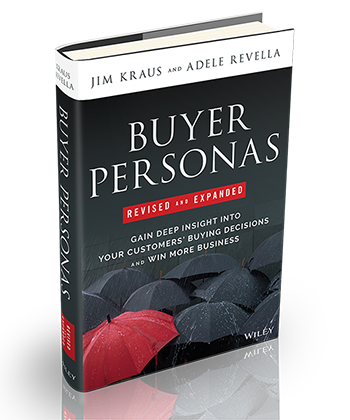
1. Why Most Personas Fail; and Why This Book Matters
Walk into any product team's workspace and you will likely find laminated cards taped to the wall: "Marketing Mary, 34, VP of Operations, drinks oat-milk lattes." These fictional composites feel productive. They give teams a shared noun to rally around. But Adele Revella's central argument in Buyer Personas (Wiley, 2015) is that this kind of persona is worse than useless, it actively misleads. When demographic profiles substitute for genuine buying insight, product teams design for a character sketch rather than for the decision architecture that determines whether real people will choose, adopt, and advocate for a product.
Revella, who spent two decades at research firms before founding the Buyer Persona Institute, proposes a radical re-grounding. A buyer persona, in her framework, is not a fictional profile but a structured record of qualitative research into how, why, and when buyers make decisions. The raw material is not surveys or analytics dashboards but unscripted, open-ended interviews — typically fifteen to twenty conversations of roughly thirty minutes each; conducted with people who have recently evaluated and either purchased or rejected a product in the category.
For product designers and developers, this reorientation has profound implications. It shifts the design brief from "build features for this demographic" to "remove the specific barriers that cause real evaluators to abandon or defer." That shift alone can redirect entire roadmaps.
2. The Five Rings of Buying Insight
The book's conceptual backbone is the Five Rings of Buying Insight — five distinct categories of intelligence that, taken together, give a product team a near-complete picture of the buyer's decision landscape. Unlike demographic attributes, these rings describe the dynamics of choice. Each ring answers a question a designer or developer should be asking before writing a single line of code or pushing a single pixel.
Priority Initiative
Ring 01What trigger event or frustration causes a buyer to begin looking for a solution in the first place? This is the "why now"; not the feature request, but the business or personal pain that makes the status quo intolerable.
Priority Initiative, In Practice
Success Factors
Ring 02What outcomes does the buyer expect after adopting a solution? These are articulated in the buyer's own language and often differ dramatically from the KPIs a product team assumes matter.
Success Factors, In Practice
Perceived Barriers
Ring 03What fears, doubts, or practical obstacles make the buyer hesitate? This ring surfaces objections that sales never hears because the buyer simply walks away silently.
Perceived Barriers, In Practice
Decision Criteria
Ring 04What specific attributes or capabilities does the buyer evaluate; and in what order of importance? This ring reveals the implicit scoring rubric buyers carry in their heads.
Decision Criteria, In Practice
Buyer's Journey
Ring 05What process does the buyer follow from initial trigger to final commitment? Who influences them at each stage? Where do they go for information? This ring maps the terrain of touchpoints and trust signals that either accelerate or stall a decision.
Buyer's Journey, In Practice
Insight Coverage, Traditional Persona vs. Revella's Five Rings
Figure 1 — Radar comparison showing how traditional demographic personas leave four of five buying-insight dimensions unaddressed, while Revella's framework covers all five.
The radar chart above illustrates a critical gap. Traditional personas excel at one dimension, the buyer profile, but leave four of the five rings almost entirely unaddressed. Revella's framework flips the distribution of effort: it deprioritizes demographics and pours attention into the decision dynamics that actually shape purchase outcomes.
Parallel: Clayton Christensen's Jobs to Be Done
The Priority Initiative ring maps directly onto Christensen's "Job to Be Done" concept (Competing Against Luck, 2016). Both frameworks insist that customers do not buy products; they hire them to make progress in a specific circumstance. Christensen's milkshake study, discovering that early-morning commuters "hired" milkshakes as a commute companion, not as a dessert, is a textbook illustration of a priority initiative that no demographic slice would have revealed. For product designers, the overlap suggests a powerful heuristic: define the trigger before defining the feature.
Parallel: Rob Fitzpatrick's The Mom Test
Revella's interview methodology resonates strongly with Rob Fitzpatrick's The Mom Test (2013), which argues that most customer conversations fail because founders ask leading, validating questions. Both authors advocate for open-ended, past-behaviour-focused inquiry. Fitzpatrick's three rules, talk about their life, not your idea; ask about specifics in the past, not hypotheticals about the future; talk less, listen more; are procedurally identical to Revella's interview protocol. The convergence reinforces a single principle for product builders: the quality of your insight is limited by the quality of your questions.
3. The Unscripted Interview, Revella's Research Engine
Revella's methodology rests on a specific type of qualitative interview she calls the unscripted or buyer insight interview. The protocol is deceptively simple: open with a single question, "Take me back to the day you first decided to evaluate a solution like this", and then follow the narrative thread wherever the buyer leads, probing with phrases like "tell me more about that" and "what happened next."
This technique belongs to a broader tradition of narrative inquiry used in ethnography and design research. Dorothy Leonard and Jeffrey Rayport's foundational 1997 Harvard Business Review article on empathic design described a nearly identical approach: observe and listen to customers in their own environment, resist the urge to hypothesize during the interview, and let patterns emerge from multiple stories rather than from a single anecdote.
A critical design decision in this protocol is the inclusion of non-buyers — people who evaluated but chose a competitor or chose to do nothing. This is where Revella's framework delivers some of its most actionable intelligence for product developers. Non-buyers reveal the exact failure points: the feature gap, the pricing friction, the trust deficit, the onboarding confusion that tipped the decision. These failure points map directly to product backlog items.
Parallel: Jeff Gothelf's Lean UX
Gothelf and Seiden's Lean UX (2013, updated 2021) argues that design research should feed directly into hypothesis-driven sprints. Revella's Five Rings can be translated into Lean UX hypotheses with minimal friction. For instance, a Perceived Barrier insight, "Buyers fear that onboarding will disrupt their existing workflow for more than two weeks", becomes a testable hypothesis: "We believe that by providing a parallel-run migration path, we will reduce the onboarding objection and increase trial-to-paid conversion by 15%." This translation from qualitative insight to quantifiable experiment is where the two frameworks achieve their greatest combined power.
4. Translating Buying Insights into Product Decisions
Revella dedicates the latter half of her book to the operationalization of buyer insights: the mechanics of turning research findings into marketing content, messaging, and sales enablement. For product designers and developers, however, the translation path is different. Buying insights feed three core product activities: prioritization, experience design, and competitive differentiation.
4.1 Prioritization: What to Build Next
The Priority Initiative and Success Factors rings together form a natural prioritization lens. Features that directly address a documented trigger event and move the buyer toward a stated success outcome should rank highest. Features that address neither, no matter how technically elegant, are candidates for deferral or elimination.
This approach converges with Marty Cagan's concept of opportunity assessment in Inspired (2nd ed., 2018). Cagan argues that before any feature enters discovery, the team should answer four questions: what business objective does it serve, what problem does it solve for the customer, who is the target customer, and how will you know if it succeeded? Revella's Five Rings provide empirically grounded answers to all four questions, replacing assumption with evidence.
Impact Matrix, Mapping Five Rings to Product Activities
Figure 2 — Relevance scoring of each Ring across three core product activities: roadmap prioritization, experience design, and competitive positioning.
4.2 Experience Design: How to Build It
The Perceived Barriers ring is a goldmine for UX designers. Each barrier is, in effect, a design brief in disguise. Consider common barrier patterns Revella surfaces in her examples: complexity of onboarding, fear of vendor lock-in, uncertainty about integration with existing tools, and anxiety about internal adoption. Each of these maps to a concrete design response: progressive disclosure during setup, data-export tooling, published API documentation, and in-app team onboarding workflows.
Don Norman's The Design of Everyday Things (revised 2013) provides the theoretical substrate. Norman's concepts of affordances (perceived action possibilities) and signifiers (cues that communicate affordances) explain why barriers persist: when a product's signifiers fail to communicate that a feared outcome will not occur, the barrier remains active in the buyer's mind regardless of the product's actual capability. Revella's research gives you the specific fears; Norman's framework gives you the design vocabulary to address them.
4.3 Competitive Differentiation: Why Build It This Way
The Decision Criteria ring reveals the implicit scoring rubric buyers carry; and, crucially, the weighting they assign to each criterion. When multiple buyers independently rank "time-to-value" above "feature depth," that is a strategic signal. It tells the product team that a streamlined, opinionated product with fast onboarding will outperform a feature-rich but complex one; even if the feature comparison table looks worse on paper.
This insight connects to Geoffrey Moore's Crossing the Chasm (3rd ed., 2014), which argues that early-majority buyers (the pragmatists who represent the bulk of a market) evaluate products on a "whole product" basis: the complete solution including support, documentation, integrations, and community. The Decision Criteria ring empirically surfaces the whole-product expectations of a specific market, giving designers the data to prioritize completeness over novelty.
5. Cross-Framework Convergence Map
The table below maps Revella's Five Rings against parallel concepts from adjacent frameworks. The convergence is striking: multiple independent thinkers, working from different disciplines, arrive at structurally similar insights about how decisions are made and how products should respond.
Parallel Framework
Christensen Job to Be Done, customers hire products to make progress in a specific circumstance
Fitzpatrick "What's the hardest part?"; past-behaviour questioning to uncover the real trigger
Combined Implication
Define the trigger before defining the feature. Validate that a genuine forcing function exists, a regulatory mandate, a system failure, a leadership change, that makes the status quo untenable.
Exemplar
Christensen's milkshake study: early-morning commuters "hired" milkshakes as a commute companion, not a dessert. No demographic slice revealed this. The trigger was the job context, not the buyer profile.
Parallel Framework
Osterwalder Customer Jobs & Gains: the outcomes buyers seek mapped to the Value Proposition Canvas
Cagan Outcome over Output, measure success by customer results, not shipped features
Combined Implication
Measure product success in the buyer's stated outcome language, not in shipped features. OKRs should use the buyer's words: "reduce close-cycle by 40%" not "ship reconciliation module."
Exemplar
Cagan's empowered product teams at Netflix and Amazon define success by customer behaviour metrics (retention, engagement), not by feature delivery velocity, directly mirroring Revella's Success Factors.
Parallel Framework
Norman Gulf of Evaluation: the gap between what the system does and what the user perceives it can do
Gothelf Riskiest Assumption: the belief most likely to invalidate your hypothesis
Combined Implication
Each barrier is a design brief. Treat barrier removal as a first-class product activity. Budget 30-40% of early development capacity for trust-building features that neutralize documented fears.
Exemplar
Gothelf's Lean UX sprint at TheLadders: the riskiest assumption was that job seekers would pay for curated listings. Buyer interviews revealed the real barrier, trust, leading to a free-trial-first design.
Parallel Framework
Moore Whole Product Model, buyers evaluate the complete solution, not just the core technology
Kahneman Attribute Substitution, when a hard criterion is inaccessible, buyers substitute an easier proxy
Combined Implication
Discover the buyer's implicit rubric; design the product (and its story) to score high on the criteria they actually weight, which often includes non-feature elements like support, documentation, and community.
Exemplar
Moore's analysis of Salesforce: won not on feature depth but on "whole product", ecosystem, AppExchange, Trailhead training. The decision criterion was completeness, not capability.
Parallel Framework
Knapp Sprint Map, mapping the user's path from trigger to outcome as Day 1 of a design sprint
Gothelf Lean UX Canvas, continuous discovery feeding design hypotheses
Combined Implication
Map the decision terrain before designing touchpoints. Align in-product experiences with where the buyer actually is in their journey; not where you assume they are.
Exemplar
Knapp's Sprint at Blue Bottle Coffee: Day 1 mapping revealed customers decided which coffee to buy before entering the store (via website). The sprint redesigned the website, not the store.
6. Cognitive Underpinnings, Why Buying Insights Work
Revella's framework gains additional explanatory power when viewed through the lens of behavioural economics. Daniel Kahneman's Thinking, Fast and Slow (2011) describes two cognitive systems: System 1 (fast, automatic, intuitive) and System 2 (slow, deliberate, analytical). Most buying decisions, even ostensibly rational B2B evaluations, are heavily influenced by System 1 heuristics.
Cognitive Load Distribution Across Buying Stages
Figure 3 — How the balance of intuitive (System 1) and analytical (System 2) cognition shifts across the buying journey, based on Kahneman's dual-process theory.
The chart above illustrates how the balance of intuitive versus analytical cognition shifts across the buying journey. In the early trigger phase, System 1 dominates: the buyer feels the pain before they can articulate it. During active evaluation, System 2 takes over as the buyer constructs comparison frameworks. But at the final commitment stage, System 1 reasserts itself: the buyer relies on gut-feel confidence and social proof to overcome the anxiety of commitment. Revella's Five Rings map neatly onto this progression: Priority Initiative captures the System 1 trigger; Decision Criteria maps the System 2 evaluation; Perceived Barriers surface the System 1 fears that reassert at commitment time.
Kahneman's concept of attribute substitution is particularly relevant to the Decision Criteria ring. When a buyer cannot easily evaluate a complex attribute (like long-term total cost of ownership), they substitute a simpler one (like price per seat). If a product team does not know which substitution heuristics their buyers use, they may optimize for the wrong dimension entirely. Revella's interviews catch these substitutions because buyers narrate their decision process in real time, revealing the shortcuts they actually took rather than the rational process they would claim in a survey.
Parallel: Amos Tversky and Loss Aversion
The Perceived Barriers ring also maps onto Tversky and Kahneman's prospect theory (1979): losses loom larger than gains. A buyer who fears disruption to their existing workflow (a potential loss) will weight that fear more heavily than a promised productivity gain of equal magnitude. This asymmetry explains why barrier-removal often has a larger impact on conversion than feature-addition: a principle that has profound implications for how product teams allocate development resources.
7. Anti-Patterns, What Revella Warns Against
Revella is explicit about practices that undermine persona quality. Product teams should watch for these anti-patterns, which are endemic in the industry:
The Frankenstein Persona. Stitching together survey data, web analytics, CRM fields, and anecdotal sales feedback into a single composite character. The result is a persona that represents no one because it represents everyone. Revella's remedy: ground every insight in verbatim quotes from identifiable interviews.
The Echo Chamber. Interviewing only current customers produces a survivorship-biased view. The buyers who rejected the product, and more importantly, those who never even considered it, carry the most actionable intelligence for product improvement and market expansion.
The Demographic Trap. Age, title, industry, and company size may define market segments, but they do not explain buying behaviour. Two CTOs at similar-sized companies can have diametrically opposite decision criteria depending on their organizational context, political constraints, and personal risk tolerance. Revella argues that buying insights should be organized around decision patterns, not demographic clusters.
The Feature Wish List. Asking buyers "what features do you want?" produces a laundry list of incremental improvements to existing mental models. Revella's open-ended narrative approach surfaces the underlying needs that features should serve: a distinction that Henry Ford apocryphally captured as "faster horses."
8. A Direct Address to Product Designers
If you are a product designer reading this synthesis, the single most transferable practice from Revella's book is this: rewrite your design briefs in buying-insight language. Instead of "design an onboarding flow for enterprise administrators," write "design an experience that neutralizes the documented barrier: 'Buyers fear that setup will require dedicated IT resources for more than three business days.'" The shift from abstract persona to specific, researched barrier changes the quality of the design conversation immediately.
Combine this with Jake Knapp's Sprint (2016) methodology. A five-day design sprint that begins with a buying-insight briefing, where the team reads and discusses actual interview transcripts, produces solutions grounded in real decision dynamics rather than team assumptions. Knapp's "How Might We" exercise maps naturally onto the Five Rings: each insight becomes a "How Might We" note, which then feeds the ideation and prototyping stages.
Alexander Osterwalder's Value Proposition Design (2014) provides another integration point. Osterwalder's Value Proposition Canvas has two sides: the Customer Profile (jobs, pains, gains) and the Value Map (products, pain relievers, gain creators). Revella's Five Rings populate the Customer Profile with empirically validated data rather than workshop guesses, making the entire canvas exercise more rigorous. The Priority Initiative maps to Jobs, the Perceived Barriers map to Pains, and the Success Factors map to Gains.
Figure 5 — Framework overlap between Revella's Five Rings and Osterwalder's Value Proposition Canvas, showing shared constructs in the intersection zone.
9. A Direct Address to Product Developers
For developers, Revella's framework offers a different kind of value: architectural empathy. Understanding the buyer's decision criteria and perceived barriers at a deep level changes not just what you build but how you build it. If the documented barrier is "fear of vendor lock-in," the architectural response is open data formats, published APIs, and export tooling; decisions that must be made at the infrastructure level, not papered over with UI polish.
If the Success Factor is "time-to-value under 48 hours," the architectural response is an opinionated default configuration, pre-loaded sample data, and a streamlined provisioning pipeline. These are engineering decisions that cannot be reverse-engineered from a demographic profile; they require precisely the kind of decision-context intelligence that Revella's interviews produce.
Teresa Torres's Continuous Discovery Habits (2021) extends this into an ongoing practice. Torres argues that product teams should conduct at least one customer interview per week, continuously feeding the insight stream. Revella's Five Rings provide a structuring framework for those weekly conversations, ensuring that each interview contributes to a cumulative, organized body of buying intelligence rather than producing isolated anecdotes.
10. Measuring the Impact of Buying Insights
Revella is candid that buyer-persona research is a qualitative method and that its value must ultimately be validated by quantitative outcomes. She recommends tracking a set of downstream metrics that serve as proxy indicators of insight quality:
Key Metrics Influenced by Buying-Insight Quality
Figure 4 — Downstream impact of buying-insight maturity on win rate, sales cycle efficiency, and 12-month retention across four practice stages.
The chart above maps three outcome categories against a maturity scale. Teams that operate without buying insights (Stage 1) typically see long sales cycles, high churn, and low win rates. As insight quality improves through systematic interviewing (Stages 2-4), these metrics shift: sales cycles shorten because objections are pre-emptively addressed in the product and its collateral; churn decreases because the product delivers on the outcomes buyers actually stated; and win rates improve because competitive positioning is grounded in the criteria buyers actually use rather than in assumed differentiators.
11. Constructive Critique, Where the Framework Has Limits
No framework is complete, and Revella's has identifiable boundaries. First, the methodology is B2B-centric. While the Five Rings can be adapted to consumer contexts, the interview protocol assumes a considered, multi-stage evaluation process that may not apply to impulse or habitual purchases. Second, the framework is deliberately qualitative and small-sample, typically ten to twenty interviews. While Revella argues persuasively that saturation occurs quickly (the same patterns repeat after eight to ten conversations), statistically minded teams may want to validate key findings with larger quantitative studies.
Third, the framework focuses on the individual buyer and gives less attention to the buying committee — the group of stakeholders who collectively influence enterprise decisions. Brent Adamson and Matthew Dixon's The Challenger Customer (2015) offers a complementary lens here, arguing that the key to enterprise sales is identifying and mobilizing the "mobilizer" within the buying committee. Product teams serving enterprise buyers may need to layer Adamson and Dixon's committee-dynamics model on top of Revella's individual-insight model.
Finally, Revella's framework captures a snapshot of buying behaviour at a point in time. Markets evolve, new competitors emerge, and buyer expectations shift. The framework needs to be treated as a living practice, a continuous research program rather than a one-time project, to remain valid. This is where Torres's Continuous Discovery Habits provides the operational cadence that Revella's framework lacks.
12. Conclusion, From Fictional Characters to Decision Intelligence
Adele Revella's Buyer Personas is, at its core, a book about replacing assumption with evidence in the act of building products. The Five Rings of Buying Insight provide a structured, repeatable methodology for understanding not who the buyer is, but what the buyer does when they make a decision; and why they do it that way.
For product designers, this means grounding every design brief in documented barriers and success factors. For product developers, it means making architectural decisions that respond to real decision criteria rather than assumed requirements. And for the broader product team, it means conducting an ongoing program of qualitative research that feeds a living, evolving body of buying intelligence.
When combined with adjacent frameworks. Christensen's Jobs to Be Done for trigger definition, Fitzpatrick's interview discipline, Gothelf's hypothesis-driven experimentation, Cagan's outcome orientation, Norman's design vocabulary, Osterwalder's value-proposition structure, Moore's whole-product thinking, and Kahneman's cognitive realism. Revella's Five Rings become not just a marketing tool but a thorough product-strategy framework.
The playbook that accompanies this synthesis (see the Excel file) translates these principles into a week-by-week implementation guide. Start with a single buying segment, conduct ten interviews, and organize the findings into the Five Rings. Within thirty days, you will have a body of evidence that can redirect a roadmap, reframe a design brief, and reground a team's shared understanding of why people do, or do not, choose your product.